
Reviving the Seemingly Overlooked: The Well of Loneliness and its Subsequent Materials
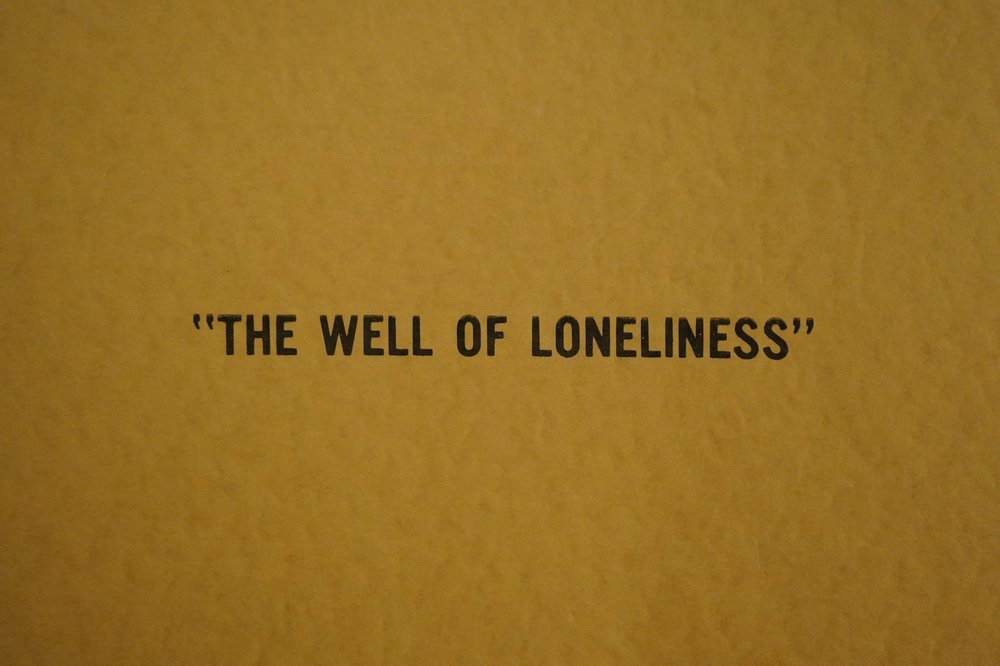
by Iman Jamison G’ 26, School of Information Studies, and SCRC Graduate Instructional Assistant
There are quite a few printed materials that are seemingly overlooked due to their place inches away from literary canon. However, I find that such materials are only waiting to be revived through places such as the SCRC. Archives and special collections are spaces for the world-renowned to sit beside the lesser-known, and celebrated works are just as numerous as traces of works in ephemeral states of ideas that might not have made it to fruition through publication or circulation. What I love about the historical record is the renewed significance given to archival materials, bringing them into 21st century dialogue and therefore adding complexity to our own understandings of representation and legacy.
One text I’d like to “revive” is The Well of Loneliness by Radclyffe Hall, an English author and poet who described herself as a “sexual invert”; ‘invert’ being an outdated term used by turn-of-the-century sexologists to describe homosexuality. At the SCRC, we house numerous “derivative” materials that explore the journey this book has made through history. Often described as one of the first European novels to revolve around lesbian themes, The Well of Loneliness centers around an Englishwoman named Stephen Gordon and their journey finding love with Mary Llewellyn, and the social isolation and rejection they face as a result. Published in July of 1928, the novel was immediately met with censorship for obscenity, largely in part due to the editor of the Sunday Express, James Douglas, who wrote scathing reviews and condemnations of the book in his paper. The book was pulled from being published just a few months later and taken to trial in November of that same year.
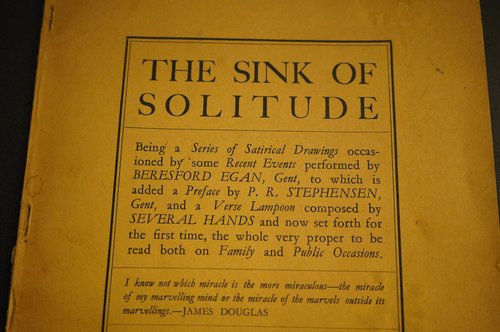
The title page of The Sink of Solitude, written and illustrated by “several hands.”
In response to the censorship, many authors such as T.S. Eliot and Virgina Woolf spoke out in protest. Another voice of protest came as semi-anonymous satirical commentary on the ridiculous nature of the controversy. The Sink of Solitude is a pamphlet of satirical verses and illustrations related to the book as well as poignant criticism of James Douglas and others involved with the censorship case. The preface, written by P.R. Stephenson, is particularly powerful, picking apart Douglas’s own words as “not fit to be sold by any newsboy or borrowed in any railway carriage.” Despite the uproar from supporters, The Well of Loneliness remained banned in Britain until 1949.
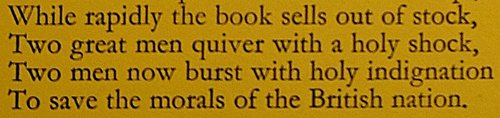
Satirical verse from The Sink of Solitude commenting on the censorship of The Well of Loneliness
Across the Atlantic, in the United States, thousands of copies were sold within the first several printings in 1929. The book was similarly met with obscenity charges and brought to court, until it was cleared of all charges. In celebration of its victory in court, the publishers Covici-Friede released a two-volume “victory edition” of the book with an autograph by the author and a summary of the US trial. We hold “copy no.119” of this beautiful edition that represents the triumph this book made in the US against censorship and bigotry.
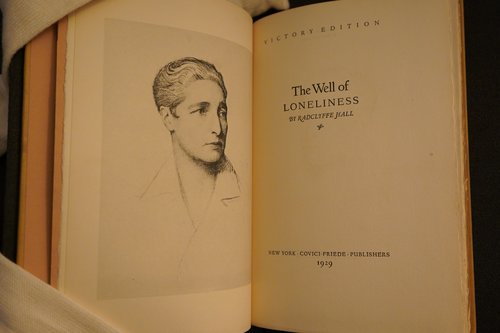
Title page of The Well of Loneliness including an illustration of Radclyffe Hall by S.A. Jacobs
As poignant then as it is today, the preface states that “against such sordid odds as the censor marshals must freedom of thought battle. Such are the tactics of those who fear a free trade in ideas…for reading means knowledge and knowledge might lead to sympathy and understanding.” The Sink of Solitude coupled with the U.S. victory edition of The Well of Loneliness allows for a renewed understanding and appreciation for the societal significance and attempted erasure of The Well of Loneliness at the time of publication.

Title page of “The Well of Loneliness” script from the Greenway Production Records
The last SCRC material I want to highlight is what I believe encapsulates the spirit of “reviving” materials such as The Well of Loneliness in the archive. The SCRC holds the Greenway Production Records which include drafts and finalized copies of numerous Greenway Production television shows and movie scripts from the 1960s. One such script is a copy of a film adaptation of The Well of Loneliness written by Robert Dozier and dated November 25, 1968. The developing screenplay was apparently canceled, and a faithful film adaptation of the book has never come to fruition. Without its place in the archive, we lose what appears to be an attempt to bring a “classic novel,” as described by Dozier, to the forefront of popular culture. One can’t help but wonder if the key to understanding its cancellation sits in another archive, waiting to be discovered.
Despite being a revolutionary text at the time of publication, among other literary texts of our time, The Well of Loneliness might not seem worthy of praise. In fact, this book is often discussed as being outdated and with many faults akin to being a fictional work of the 1920s. However, I believe that is more reason to “revive” this literary text in the discussion of historically queer representation, the evolution of queer canon, and significant battles of censorship that continue to this day.
References:
https://yeoja-mag.com/queer-icon-radclyffe-hall/
https://www.gutenberg.org/ebooks/73042
https://en.wikipedia.org/wiki/Radclyffe_Hall#The_Well_of_Loneliness
https://www.bbc.com/culture/article/20221121-the-well-of-loneliness-the-most-corrosive-book-ever